IA Exercise, Knowledge Base Migration to Confluence
A self-initiated card sort using UXtweak to inform the architecture of a 400-plus page knowledge base migration for Staples' Salesforce support team.
Staples' Salesforce support team knowledge base lived on a 400-plus page Google Site with no clear structure, mid-transition to Confluence. Self-initiated to base the new architecture on user input rather than assumption.
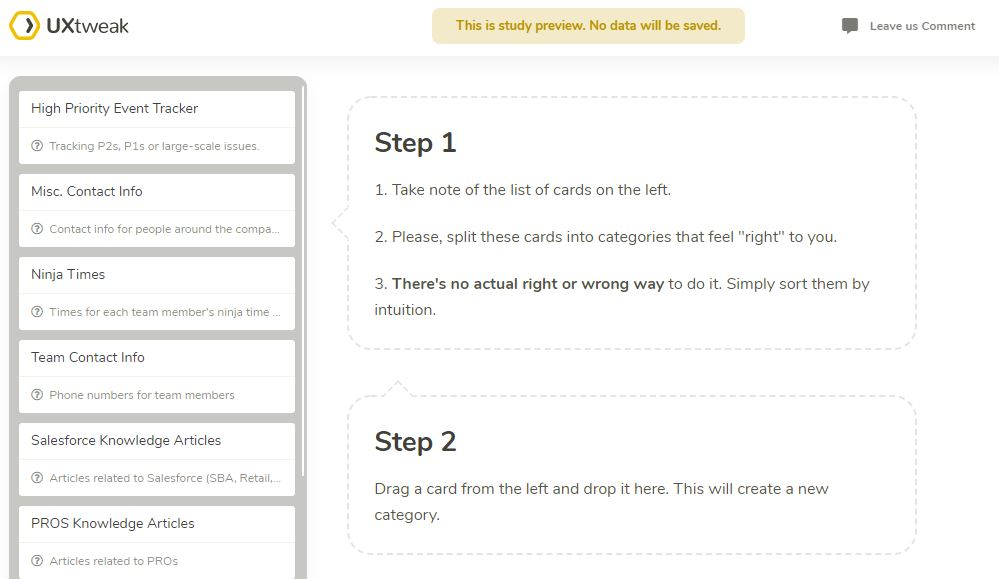
Closed, unmoderated card sort in UXtweak. 37 cards representing the knowledge base's actual functional areas (High Priority Event Tracker, Salesforce Knowledge Articles, PROS Knowledge Articles, Ninja Times, Team Contact Info, Misc. Contact Info). 10 support team members invited to sort cards into their own categories.
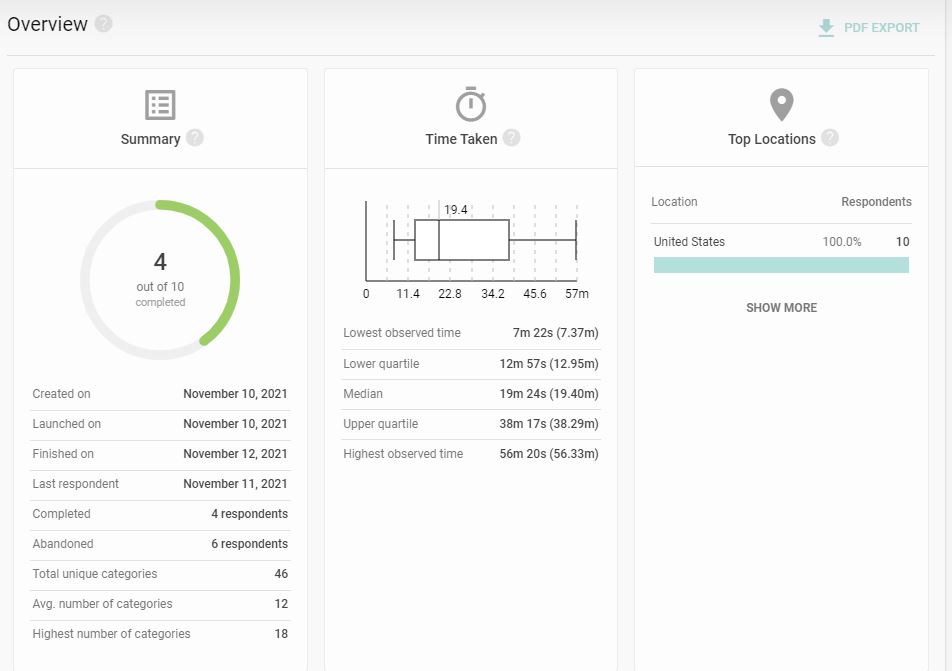
4 of 10
completed the sort, a 60% abandonment rate that became the study's most important signal.
7–56 min
Completion time range
46
Unique categories across 4 sorts
12
Avg categories per person
Most participants who abandoned the sort did so within the first several minutes, and the four who completed produced almost no consensus: 46 unique category groupings across only four completed sorts. That spread was the finding. A deep, hierarchical taxonomy would have reflected assumptions, not behavior. The data pointed the other way, toward a shallow, browse-first structure that let people find content by keyword rather than by navigating a taxonomy someone else invented.
New Confluence architecture built on a small set of fixed top-level pages plus an alphabetized browse-by-topic index rather than a deep taxonomy. Space grew from an early leaner version to a more developed one with added sections and ongoing article updates.
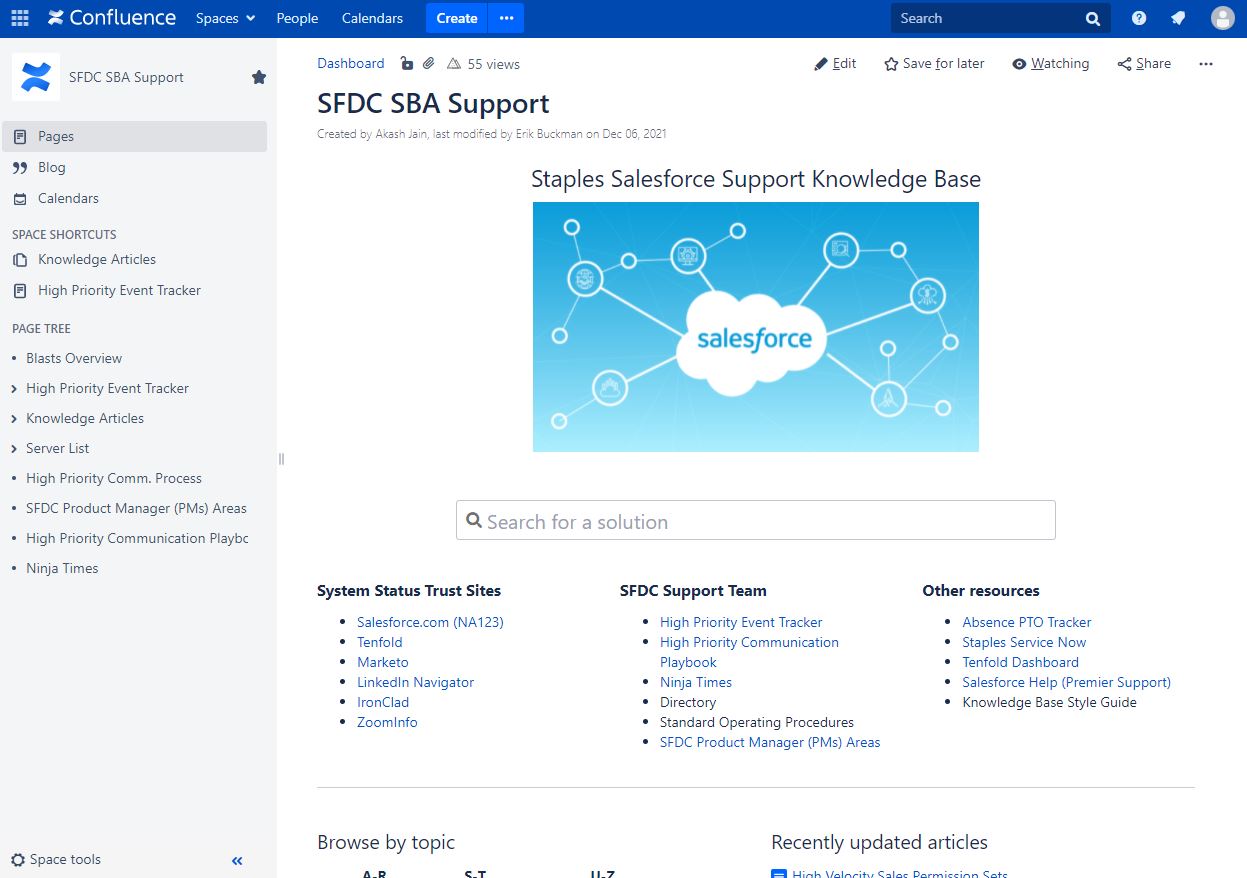
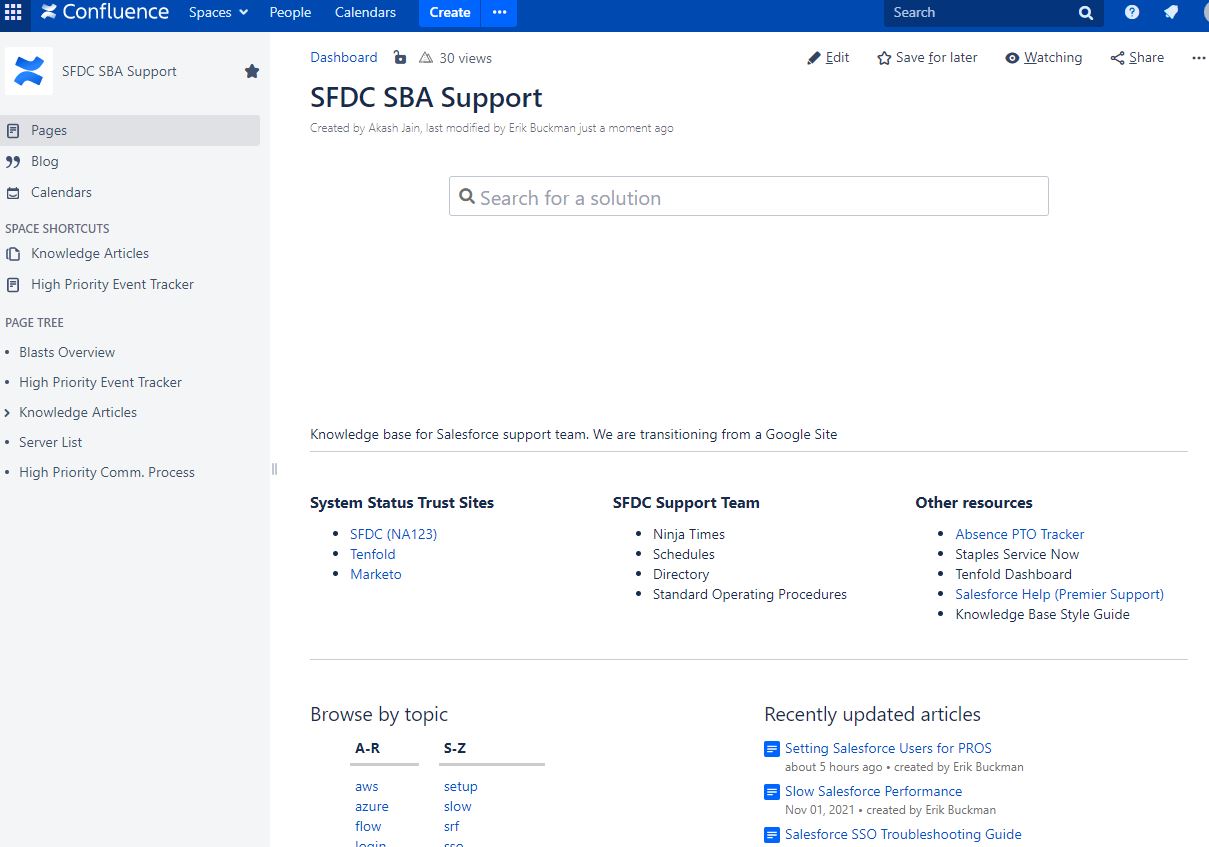
SFDC SBA Support Confluence space, before and after the card sort informed restructuring.